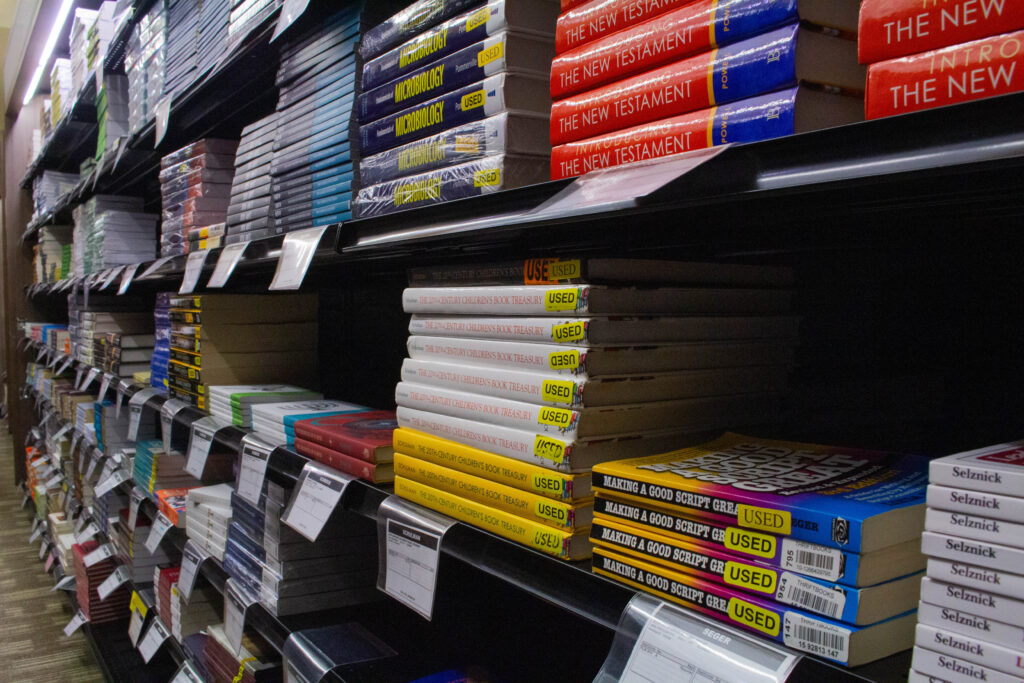
As digital media becomes increasingly present in everyday life, its influence extends beyond social interaction. Schools, universities and educators have adapted to a changing digital environment, and the market for educational materials has changed along with it.
Students now have more ways to access course materials, from traditional print textbooks to digital editions and lower-cost online resources.
A 2019 Wired article reported that textbook prices had increased 183% over the previous 20 years, citing data from the Bureau of Labor Statistics. Rising textbook costs have given students another factor to consider when deciding how to access materials for their classes.
Hannah Micu, senior business administration and art therapy double major, considers several factors when choosing between physical and digital textbooks.
“I don’t usually let preference dictate [my choice] too much. I’m a price-sensitive buyer; I’m a college student,” Micu said.
Other students have developed their own approaches to deciding when and how to purchase course materials.
Emely Murillo-Vega, senior biochemistry and molecular biology major, shared how she approaches required textbooks.
“You can find an online version [for cheaper]…I think I paid about $5 for a book once,” Murillo-Vega said.
Digital textbooks can provide features beyond portability and price. Micu and Murillo-Vega said tools such as highlighting, note-taking and keyword search functions influence their decisions when choosing between digital and physical formats.
As digital course materials become more common, the shift raises questions about the place physical textbooks will continue to hold for publishers, universities and readers.
Micu’s choices between digital and physical formats depend on how she plans to use the material.
“I love hard copies. Especially if I’m reading the text for content instead of study or memorization… I just love the physical book,” Micu said.
Even with her preference for physical books in some situations, Micu often chooses digital textbooks for her coursework.
Price, convenience and personal preference continue to shape how students access the materials they need for class. Digital textbooks offer affordability and useful tools for some, while physical books continue to provide a reading experience others prefer.
As course materials continue to evolve, physical and digital textbooks may each maintain a place in higher education, leaving students to decide which format best fits their classes, budgets and learning preferences.