
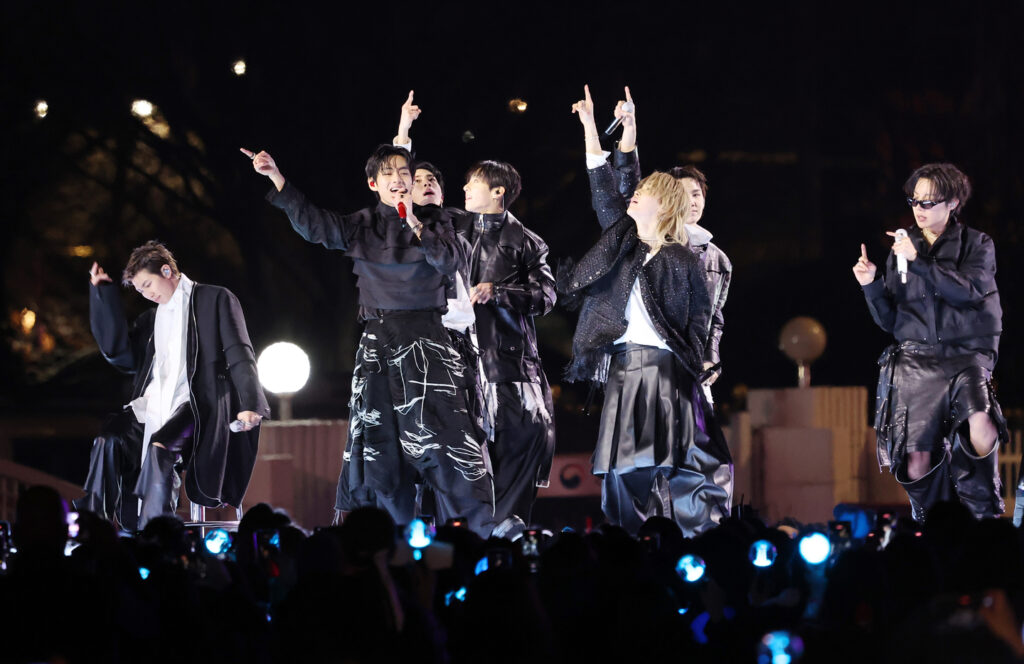
When the lights went up over Gwanghwamun Square in Seoul, South Korea, on the night of March 21, the event marked more than a free concert. For the members of BTS and the millions of fans watching through the global Netflix livestream, it signaled a long-awaited homecoming and the beginning of a new era.
As a fan with a passion for music who began following the group after they completed their mandatory military service in June 2025, I quickly dove into their discography. I listened to each genre the group explored during its 12 years together.
While I quickly fell in love with the raw energy of older work such as “Dark and Wild,” nothing prepared me for the thrill of the new album. The comeback surrounding their album “ARIRANG” marked not just a return to the stage but a declaration that one of the biggest groups in the world had officially returned.
The journey to this stage proved historic for BTS. The group did not simply enter the Western market in 2017. They dominated it in a way not seen since the height of The Beatles. Historically and culturally, they surpassed standards set by past legends and proved a group from South Korea could command the global stage while singing in its native language.
Their influence helped K-pop shift from a niche interest to a mainstream force in the West. This success did not come without challenges. Throughout their rise, the group faced criticism and prejudice from those who dismissed them as a passing trend. They overcame those obstacles by letting their music, work ethic and award nominations speak for them.
Part of what made BTS work was the contrast between the members. Each brought a different style while remaining rooted in a shared identity that united the group. During a recent interview with Zane Lowe about their comeback, the members spoke openly about their future.
They acknowledged the journey would not last forever but promised to continue without regrets as long as it remained meaningful to them. They stayed true to that promise and gave everything they had on stage.
The stage stood in front of the historic gates of Gwanghwamun Square, which created a visual bridge between traditional Korea and modern music. The wardrobe stood out, combining traditional hanbok elements with high-fashion streetwear. Dark silks and black leather reflected the red and white lights that shifted throughout the performance.
The clothing did not feel like costumes. Instead, it felt like a representation of Korean culture that blended tradition with modern style. Watching from home, the event felt both electric and personal as the members frequently interacted with the crowd and turned a massive public square into something that felt intimate.
Musically, the depth of the new songs in the “ARIRANG” setlist suggested the group reached a creative peak. The members promised songs that reflected their journey from the beginning of their careers to the maturity gained during their time away while still preserving elements of their earliest work. The tracks shifted from high-energy rock-pop in “2.0” to soft alternative pop in “Swim,” yet the transitions felt cohesive.
Another standout element of the comeback involved choreography. BTS has long been known for moving in sync but the performance revealed new depth in their movement, leaning more heavily into modern hip-hop styles.
The choreography focused less on difficult moves and more on storytelling through motion as they sang. During the more lyrical songs, the dancing appeared fluid and contemporary and revealed a softer side of the group. Smooth transitions between songs showed how their four years of solo work strengthened their unity when they reunited.
The Netflix production also stood out. The camera work felt intimate and allowed viewers at home to see subtle expressions of joy on the members’ faces. The contrast between their early high-energy style and the more reflective themes of their recent music showed how the group matured alongside its audience.
As the night ended with fireworks over the square, the message became clear. BTS did not simply survive their time apart. They thrived. For fans who joined the fandom during their hiatus, the comeback offered a first glimpse of the group’s signature energy and hinted at what may come next.

