
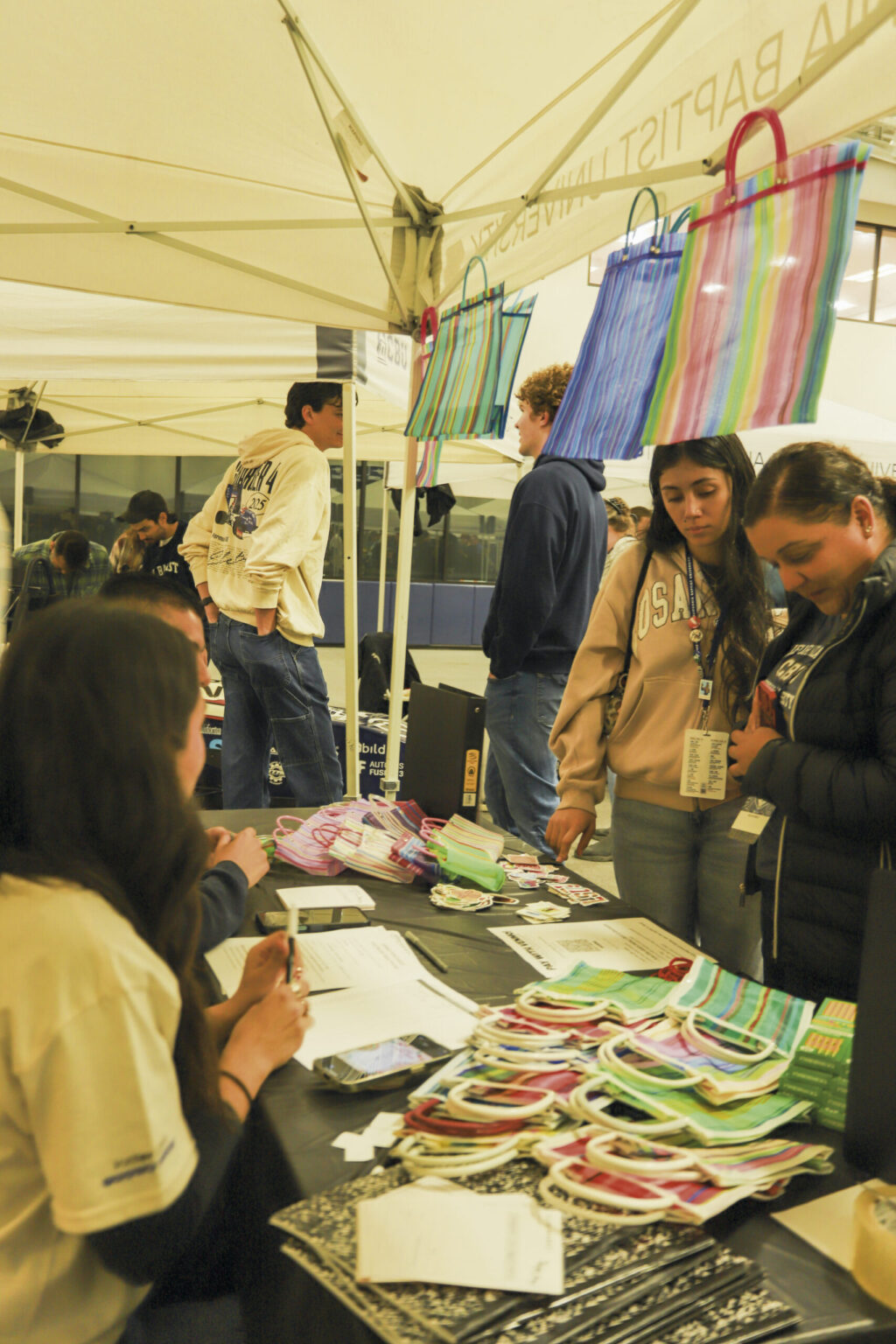
Serving as a club officer and holding a leadership position played a significant role in shaping a student’s college experience. Clubs varied widely, from the Disney Club to the Accounting Society, and provided spaces for students to build connections and develop collaborative skills.
Alyson Nishimura, president of the Accounting Society and senior accounting major, had been involved with the club for several years before becoming president.
“I think it trains you to be a professional who is sellable, and so being in leadership especially gives you an opportunity to present yourself differently in front of companies because it shows that you are not only interested in [your major], but also able to branch out and be involved outside of school,” Nishimura said.
Nishimura’s experience reflected how leadership required collaboration for a club to succeed. Although teamwork sometimes presented challenges, working together remained essential to the success of any group.
Cole Townsend, senior marketing major, served as president of the Philosophy Club and secretary of the Disney Club. He shared insights about the importance of collaboration in leadership.
“It teaches you how to ask others for help and to reach out. I think it allows you to build yourself a support group and a team around you, which can help you take on tasks,” Townsend said. “It just teaches us more about how we alone can’t do anything, how we need God to help us and we need our brothers and sisters to support us in our endeavors.”
Leadership roles also emphasized teamwork. Dr. Elizabeth Morris, associate provost for educational effectiveness and adviser for the Disney Club, echoed that message.
“Good student leaders make for good club experiences, and so those who want to be student leaders are typically the ones who [speak up],” Morris said.
Clubs often reflected the leadership guiding them, which made branding and identity important elements of growth. Morris expanded on this idea.
“I think more than anything, [branding themselves] allows my leaders to stop and look beyond themselves and really start thinking about what’s important to everyone, not just the individual, which then allows them to brand themselves through the understanding of themselves and others,” Morris said.
Clubs also worked intentionally to grow their presence on campus. Townsend discussed how the Philosophy Club increased awareness and strengthened its identity.
“We’re focusing [on] a new marketing campaign, trying to make sure people have knowledge of our club. We’re in contact with the Christian Studies division of CBU to get our advertisements on their advertising TVs in the Yeager Center, and also just working on word of mouth and improving our email frequencies,” Townsend said.
Nishimura also described how the Accounting Society expanded its reach and supported students through networking opportunities.
“The [accounting] professors have been really helpful at promoting our club in their classes. It’s truly a club to where if you want to grow, we have the opportunity for you to do so. A large part of accounting is connections, and so it gives them an opportunity to expand their network,” Nishimura said.
Holding a leadership role or simply participating in a club taught students how to lead, budget, brand and grow. Club involvement created opportunities to develop business and leadership

