
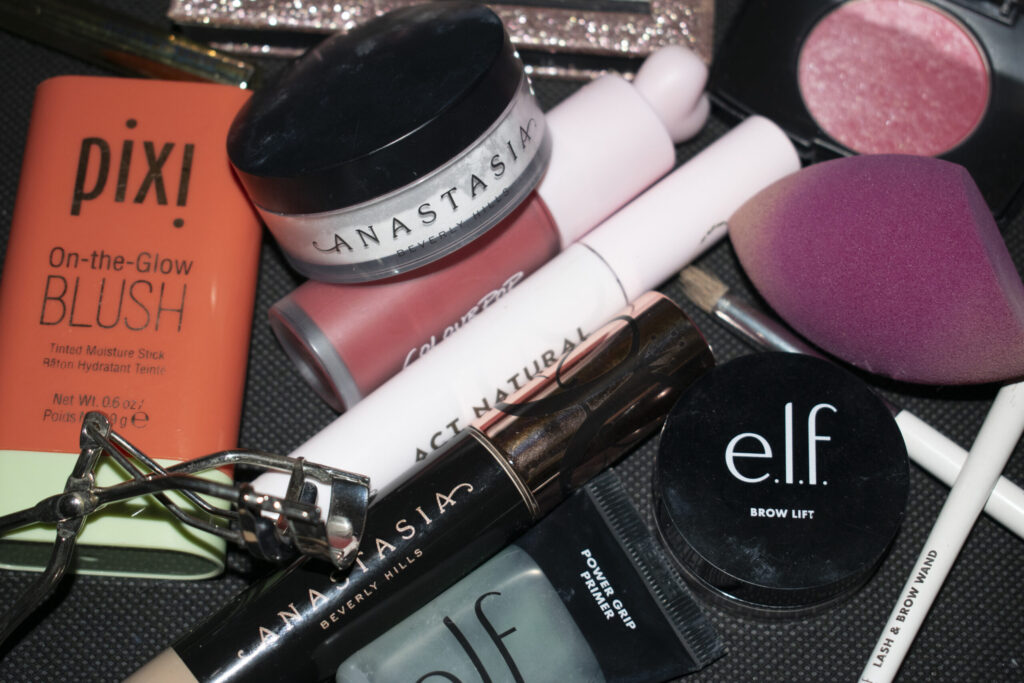
Many women use cosmetics daily without realizing the potential harm certain ingredients could cause to their bodies, prompting some California Baptist University students to seek eco-friendly alternatives.
Keyla Romanello, sophomore pre-nursing major, began using makeup at an early age and said she currently used makeup at least five times a week.
“I just always saw my mom putting on makeup, like in the morning or for school, so I’d just be like, ‘Oh, I want to wear makeup,'” Romanello said.
Romanello first used light beauty products in eighth grade. However, she said she did not fully embrace makeup until high school.
“I started wearing makeup in like eighth grade, like mascara and lip gloss and stuff, but I didn’t start using makeup, makeup, until maybe junior year of high school,” Romanello said.
Although she said she was unaware of the chemicals found in many products, Romanello chose brands she believed were less toxic, such as NARS, Kylie Cosmetics and Physicians Formula.
“I try to use a lot of stuff that is noncomedogenic just because I do have acne-prone skin, but honestly, I don’t pay attention to the chemicals,” Romanello said.
Some women at CBU used makeup less frequently and applied beauty products only on occasion. Jazmin Barrios, sophomore pre-nursing major, said she rarely wore makeup but still owned cosmetic products.
“Yeah, I don’t wear a full face like that; I’ll wear mascara, but that’s it,” Barrios said. “I just don’t like doing it.”
Although Barrios avoided buying makeup regularly, she said she began experimenting with it in eighth grade and decided to use it occasionally. Her go-to products included brands such as MAC and Maybelline.
MAC beauty products were generally considered safe for the skin and were often categorized as lower-hazard compared with some other popular brands such as L’Oréal or CoverGirl.
While beauty products felt like a chore for some, others used them as a way to express themselves and build confidence. Lyanna Urroz, sophomore pre-radiology major, said she used makeup two to four times a week to enhance her appearance.
“Just to, like, kind of look good, kind of feel good, kind of thing. Like make myself look presentable,” Urroz said.
Urroz said she began wearing makeup during her junior year of high school and used several well-known brands, including Revlon, ELF and MAC.
Revlon remained a popular brand for self-expression. However, some products contained parabens, which have raised health concerns. Over time, the company removed certain toxins and introduced EWG-verified products designed to support both beauty and overall health.
Leilany Landeros, sophomore exercise science major, also said she used makeup to appear more presentable and boost her confidence.
“Maybe like to enhance some features here and there,” Landeros said.
She said she used beauty products such as Maybelline and ELF three to four times a week. Although these products helped some women feel more confident and secure, they were not always considered the healthiest options.
Researchers have identified PFAS—per- and polyfluoroalkyl substances—in many well-known cosmetic products. These chemicals are often added to help products “last forever.”
PFAS in cosmetics can pose health risks when repeatedly absorbed through the skin. Studies have identified more than 231 products containing these chemicals.
According to The Guardian, “Products that were checked for individual PFAS compounds contained between four and 13 types in each. The study’s authors tested cosmetics made by dozens of brands, including L’Oréal, Ulta, MAC, CoverGirl, Clinique, Maybelline, Smashbox, Nars, Estée Lauder, and more.”
Although many people want to look their best, health remains an important priority. Some consumers have turned to alternatives such as ILIA Beauty, RMS Beauty or Kosas to maintain both appearance and well-being.

